


The Internet Is a Key Part of Everyday Life and Everyone Needs It
In 2020 the City of San Diego recognized the critical need for all residents to be connected to the internet due to barriers faced by many communities from the pandemic.
SD Access4All was established to connect residents to internet, digital skills and digital tools.
“Access to reliable broadband is no longer a luxury; it’s a necessity for education, employment, healthcare, and daily life.”
Mustafa Sahid, Somali Family Service Director of Operations

What is the Broadband Master Plan?
The Broadband Master Plan provides data on the availability and affordability of internet across the city including for low-income housing residents, and at public-serving City facilities. The plan identifies communities and populations that experience the greatest challenges, and it makes recommendations on how to improve conditions for residents.
The Implementation Plan provides a roadmap to help City leadership carry out recommendations from the Master Plan.
How was the Broadband Master Plan created?
To make sure that we heard about experiences and solutions directly from residents and local businesses themselves, the City of San Diego partnered with six Community Based Organizations working in neighborhoods most impacted by the Digital Divide to lead outreach and to gather input on the plan. CBOs and City staff reached over 13,000 residents through focus groups, info sessions, door knocking, surveys, internet speed tests and more.
The Broadband Master Plan was funded by a $500,000 State of California Local Agency Technical Assistance grant. CTC Technology and Energy was selected to develop the plan. All work aligned with the City’s commitments to equity, sustainability and the City of San Diego Strategic Plan.
What does internet access in San Diego look like today?
Click on a finding below to learn more about it.
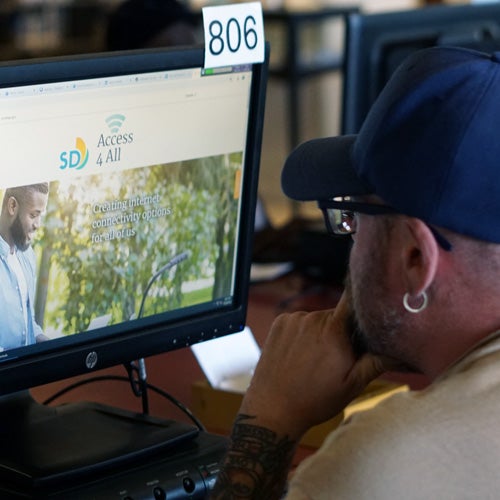
Affordability Is the Main Barrier
Affordability Is the Main Barrier
"Internet service costs have gone up though we know the necessity of it after Covid. It’s really expensive and that affects our family." - Resident from focus group
"What I observe in our community is mostly reliance on mobile phones for internet because home internet is too expensive." - Resident from focus group
The biggest obstacle to broadband access in San Diego is affordability. Approximately 16% of San Diego households (nearly 86,000 homes) do not subscribe to available wired home broadband services and this figure rises to thirty percent among low-income households. Many low-income households, seniors, and families of color simply cannot afford the monthly cost of reliable internet service, even when infrastructure is available. This financial barrier leaves thousands of San Diegans disconnected from an essential lifeline and limits opportunities in education, employment, and healthcare.
End of Federal Internet Subsidies Deepened the Digital Divide
End of Federal Internet Subsidies Deepened the Digital Divide
"There are retired people like us, or those without a job , who are looking for the most affordable options." - Resident from focus group
The expiration of the federal Affordable Connectivity Program (ACP) in 2024 had a dramatic impact, cutting off a $30/month subsidy for over 100,000 low-income San Diego households. Without this support, many families were forced to reduce or cancel their internet service, making the digital divide even more severe for the city’s most vulnerable residents.

Digital Divide Is Most Severe for Low-Income, Senior, and Underrepresented Residents
Digital Divide Is Most Severe for Low-Income, Senior, and Underrepresented Residents
"A difficulty I face is being an older adult who doesn’t know where to go to learn how to use my phone and computer." - Resident from focus group
"[Students] are signing up for classes but dropping out because of lack of devices or Wi-Fi." - Community College representative
The Digital Divide in San Diego is not evenly distributed. It is most pronounced among low-income families, seniors, and communities of color, who are far more likely to lack both home internet and the devices or digital skills needed to participate fully in modern life. These disparities reinforce existing inequities and limit access to critical resources.
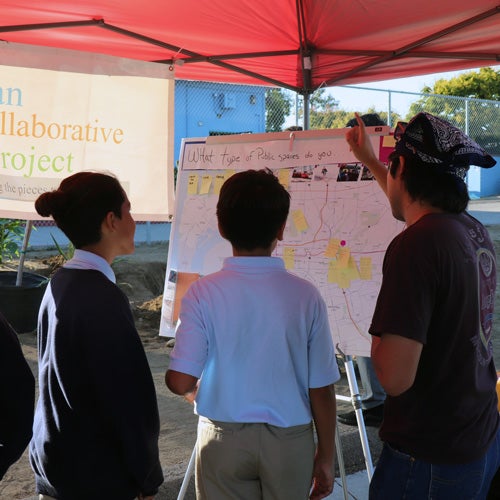
One Third of All City Locations Are Left with a Singular Broadband Internet Service Provider
One Third of All City Locations Are Left with a Singular Broadband Internet Service Provider
"I chose my plan because it was the only choice." - Resident from focus group
About one third of San Diego’s residential locations are served by only a single broadband internet provider, usually a cable company. This lack of competition limits consumer choice and keeps prices higher, making it even harder for residents to subscribe to affordable, high-quality broadband options.
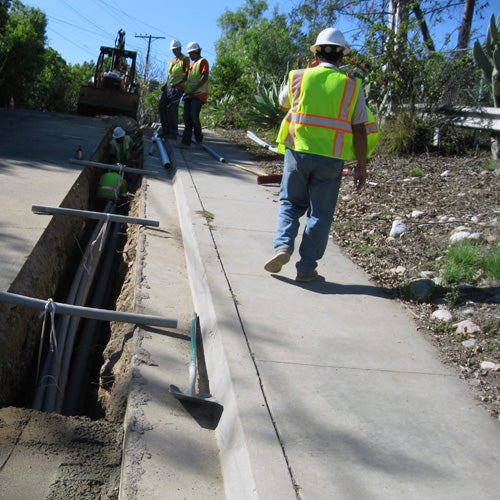
Fiber Infrastructure is Expanding
Fiber Infrastructure is Expanding
"The Wi-Fi gets very slow, especially during the time we were working from home, particularly during the pandemic." - Resident from focus group
Fiber optic service is considered the gold standard for broadband internet because it is more reliable and can reach the highest speeds. Historically, fiber deployment was seen more in wealthier neighborhoods, but in recent years fiber has expanded in areas with higher density housing. This has resulted in increased access to fiber for lower-income households. But the issue of affordability is still a primary barrier for many.
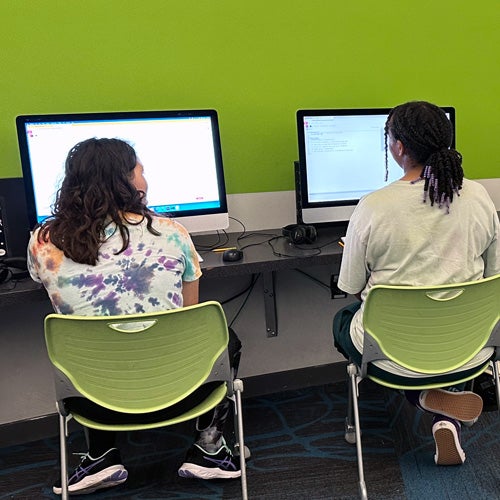
Demand for SD Access 4 All Programs Exceed Current Capacity
Demand for SD Access 4 All Programs Exceed Current Capacity
"Hotspots are very popular and it’s hard to get hold of them…people use it for their primary access." - Resident from focus group
"One of my biggest challenges with the internet is figuring out how to navigate it." - Resident from focus group
Programs like SD Access 4 All—which provide public Wi-Fi, device lending, and digital skills support—are lifelines for many residents, but demand far outstrips supply. Hotspot lending programs are almost always checked out, and public Wi-Fi is heavily used at transit centers and community hubs, highlighting the urgent need for expanded digital equity efforts.
What We Learned
The following feedback and data were gathered by six Community Based Organizations that partnered with the City to lead outreach, as well as data from the San Diego Housing Commission and publicly available data from Federal sources including the U.S. Census Bureau. The CBOs involved in community outreach efforts include Casa Familiar, City Heights CDC, San Diego Black Chamber of Commerce, Sherman Heights Community Center, Somali Family Service, Urban Collaborative Project.
Internet access
1/3 of households in low-income areas do not subscribe to home broadband.
104,144 households in the city of San Diego lost a $30/month subsidy when the Affordable Connectivity Program ended in 2024. Many survey and focus group participants reported dropping service or struggling to pay bills as a result.
46% of San Diego Housing Commission (SDHC) survey respondents without internet said cost for internet services and/or devices was their primary barrier.
In some low-income ZIP codes, up to 20% of households rely only on a smartphone for internet access.
Most low-income households are not enrolled in available low-cost internet programs (despite eligibility), due to complex paperwork and strict requirements.
Only 59% of households in San Ysidro have a wired broadband subscription; in the Promise Zone, its 67%.
Device Access
16% of lower-income survey respondents said they do not have enough computers in good working order.
20% of CBO survey respondents said they could not replace a broken device within 6 months; 10% said they could not replace it at all. Many cited service cost, device access, and digital skills as their biggest challenges.
33% of non-English speakers said they do not have enough devices for their household.
Digital Skills
Only 49% of low-income households are “very confident” accessing government services online. Among seniors (60+), just 54% are "very confident" accessing medical or government services online.
Community-based organizations reported that many families need help navigating online government programs.
SD Access 4 All
Public Wi-Fi is heavily used at transit centers and community hubs, with some sites seeing 500–900 unique devices per month.
Hotspot lending programs are almost always checked out, indicating high unmet demand.
Digital Equity Priority Area (DEPA) Map
The Digital Equity Priority Area Map is a strategic tool developed by the City’s Broadband Master Plan consultants to identify neighborhoods where residents face the greatest barriers to digital access and inclusion. This map is designed to guide the City’s investments and initiatives in closing the digital divide, ensuring that resources are directed to communities with the highest need.
Scoring Guide:
- Broadband adoption rates: The percentage of households with wired home internet.
- Eligibility for low-income subsidies: The proportion of households that qualified for the federal Affordable Connectivity Program.
- Reliance on mobile data: The share of households that depend solely on mobile phones for internet access.
- Device ownership: The percentage of households with access to a laptop or desktop computer.
- Average household income: Used to assess economic barriers.
- Community-based organization (CBO) feedback: Qualitative input from organizations working directly with residents.
- Lack of provider competition: Areas with only one available internet provider are flagged as higher need.
Implementation Goals
Goal 1: Continue to invest in free Wi-Fi citywide with a focus on digital equity priority areas
| Action | Section of the Broadband Master Plan | Section of Implementation Plan | Key Performance Indicator (KPI) |
|---|---|---|---|
| Expand Wi-Fi at high-traffic SDMTS transit sites. | 2.1.10 | 2.5 |
|
| Install additional signage at Wi-Fi sites and run awareness campaigns to promote low-utilization sites. | 2.2.4 | 2.5 |
|
| Action | Section of the Broadband Master Plan | Section of Implementation Plan | Key Performance Indicator (KPI) |
|---|---|---|---|
| Establish a regional Digital Equity Coalition to improve coordination among regional stakeholders and advise on City programs. | 2.6.1 | 2.1 |
|
| Identify alternative funding sources to support programming and strengthen partnerships with local organizations through the establishment of a San Diego Community Digital Equity Grant Program pilot. | 2.6.3 | 2.2 |
|
| Advise local businesses on increasing their donations of old devices to designated computer refurbishers. | 2.6.7 | 2.6 |
|
Establish additional computer labs at recreation centers and San Diego Housing Commission properties. | 2.6.6 | 2.8 |
|
Goal 3: Promote broadband competition and Infrastructure expansion
| Action | Section of the Broadband Master Plan | Section of Implementation Plan | Key Performance Indicator (KPI) |
|---|---|---|---|
| Centralize and coordinate wireless siting processes on City assets | 2.4.1 | 2.3 |
|
| Promote ISP competition by establishing wiring standards for new developments and public housing by requiring spare conduit to be installed from the Right-of-Way. | 2.4 |
| |
| Determine appropriate mechanisms to enforce new tenant right-to-choose legislation (AB1414) for broadband services. | 2.2.5 | 2.4 | Non applicable |
| Action | Section of the Broadband Master Plan | Section of Implementation Plan | Key Performance Indicator (KPI) |
|---|---|---|---|
| Hire additional Digital Navigators to increase digital literacy, device access, and broadband adoption among underserved communities. | 2.6.5 | 2.6 |
|
| Action | Section of the Broadband Master Plan | Section of Implementation Plan | Key Performance Indicator (KPI) |
|---|---|---|---|
| Utilize targeted Broadband Infrastructure RFP to increase Internet Service Provider competition in Digital Equity Priority Areas. | 2.2.1 | 2.10 |
|
Meet Our Partners
These organizations are working with the City of San Diego to help us Increase long-term broadband availability and affordability in San Diego.







The National Digital Inclusion Alliance has compiled terms and definitions that may be useful for your understanding of the report and digital equity in the City of San Diego.
 Information Technology