


Priority of Cases
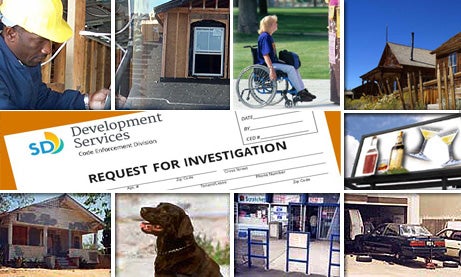
The Building & Land Use Enforcement Division responds swiftly to address serious private property violations and assigns a priority to each investigation. Cases that pose imminent health and safety hazards or constitute significant code violations are given the highest priority, since they have the highest potential to result in significant harm to the community. Infraction-level cases are directed to Alternative Compliance, which helps to produce voluntary compliance at the neighborhood level. Building complaints are assigned to Combination Inspectors, who are responsible for enforcing building codes. Zoning complaints are assigned to Zoning Investigators who are responsible for enforcing development and land use regulations. Budget cuts for Fiscal Years 2026 and 2027 have resulted in a reduction of the types of Priority III violations currently investigated.
Priority I Cases
Imminent Health and Safety Hazards
These cases are inspected within a business day.
Building Complaints
- Dangerous/Unstable Structures
- Inadequate barriers for swimming pools/spas
- Leaking sewage
- Live, exposed electrical wires
- Uninhabitable living conditions
Zoning Complaints
- N/A
Priority II Cases
Significant Code Violations
These cases are inspected within five business days.
Building Complaints
- Substandard housing conditions
Zoning Complaints
- Abandoned Properties
- Disturbance of environmental resources
- Historic Sites
- Unpermitted grading
Priority III Cases
Other Code Violations and/or Conditions Adversely Impacting Quality of Life
These cases are inspected within 20 business days.
Building Complaints
- Building, electrical, plumbing and mechanical violations
- Disabled access
- Garages illegally converted to living space
- Unpermitted construction
- Unpermitted demolition
- Unpermitted dwelling units
Zoning Complaints
- Discretionary permit violations
- Streetaries
Alternative Compliance
Complaints and concerns served by Alternative Compliance include:
- Front yard parking violations
- Garage sales
- Lighting
- Signs
- Street trees
- Noise
- Submit a report for machinery/equipment or animal noise.
- Contact the San Diego Police Department at 619-531-2000 to report noise coming from social gatherings, bars, loud voices, music, parties, radios, musical instruments, TVs, loudspeakers or sound amplifiers, or vehicle noise (including radios, loud mufflers, or car alarms).
With Alternative Compliance, when a complaint is received, a case will be opened immediately. After a brief initial review, correspondence begins. Staff provides structured information to the alleged violator and the complainant.
These matters are typically best addressed by discussion with neighbors, and the City-provided information helps to guide that approach. If needed, mediation can help resolve questions between neighbors. Community members interested in mediation can contact the National Conflict Resolution Center at 619-238-2400.
Not Currently Enforced
Budget cuts for Fiscal Years 2026 and 2027 eliminated the types of Priority III violations that Building & Land Use Enforcement may investigate, including the following complaint types. BLUE is still accepting Requests for Investigation of these issues for statistics tracking. Cases are opened and immediately closed with no further action. BLUE will use the collected data to support an increase in enforcement personnel if there is an opportunity to add positions in future budgets.
- Accessory structures
- Adult entertainment
- Billboards
- Fence/wall violations
- Food trucks
- Garages used for storage
- Landscaping
- Newsracks
- Off-street parking elimination
- Operation of businesses/uses not requiring a permit
- Outdoor merchandise displays
- Recycling facilities
- Residential care facilities
- Setback violations
- Sidewalk cafes
- Storage (that does not affect egress)
- Unpermitted businesses/uses requiring a permit
- Vacant properties (unless abandoned)
- Vehicle repair