

 CONNECT with the City
Neighborhood Homes for All of Us
Neighborhood Homes for All of Us

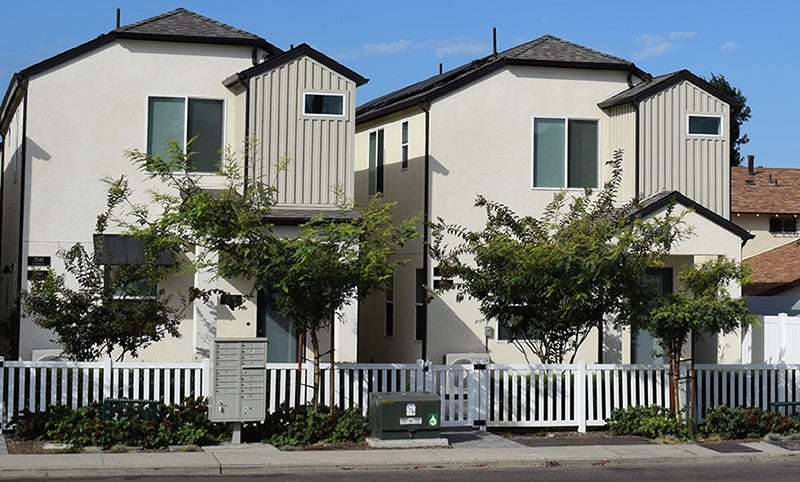
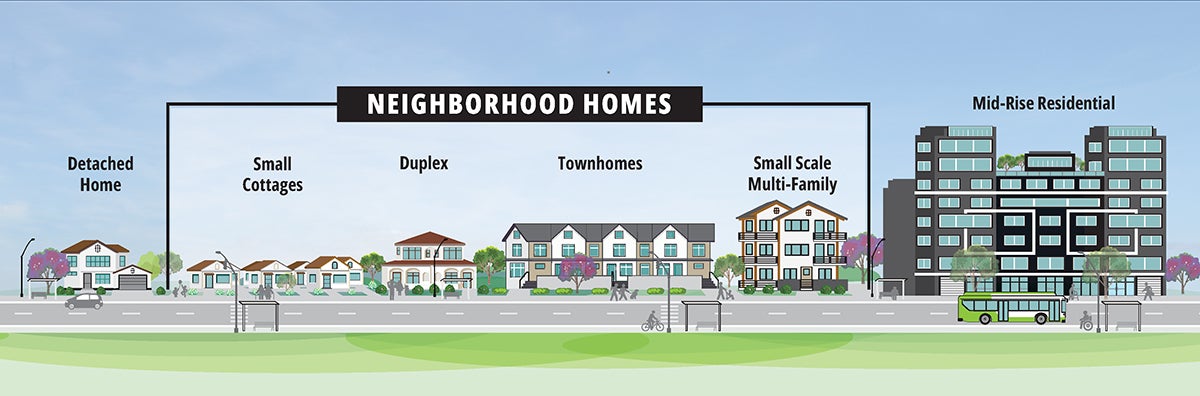
Neighborhood Homes for All of Us will create opportunities for more small-scale neighborhood homes in areas currently zoned for single-family homes that are near public transit. Neighborhood homes are townhomes, duplexes and small-scale multiple-home buildings that complement the surrounding area, maintaining the neighborhood’s high desirability. By allowing for more than one home on an existing lot, the opportunity to buy or rent one of these homes will be at a more accessible price point for more San Diegans, including first-time homebuyers and middle-income households.
Why are neighborhood homes important?
In San Diego, 80% of the land zoned for homes is designated for single-family homes. These homes in these neighborhoods are highly desirable. However, their increasing prices make purchasing or renting difficult for many families.
In addition, most new homes being built in San Diego are often 5-7 story apartment buildings with studios and one-bedroom homes available for rent. While these homes also address the housing needs of many San Diegans, families with children and multigenerational households often need more space to live comfortably. Neighborhood homes can provide these opportunities within existing San Diego neighborhoods where so many people desire to live.
Consistent with the City’s General Plan, opportunities for neighborhood homes will be focused on areas that can accommodate development near transit and neighborhood amenities. Neighborhood home development can be focused in areas supported by convenient and affordable opportunities to walk, roll, bike and ride transit to conduct daily activities.

Strategic Plan Priority Areas of Focus
Neighborhood Homes for All of Us focuses on the following priority areas of the Strategic Plan:
Create Homes for All of Us
Provides opportunities for small-scale neighborhood homes in all communities that will meet the needs of more San Diegans.
Champion Sustainability
Provides opportunities for homes in existing communities with access to walking, rolling, biking and transit connections.
How Will It Happen?
Phase 1: Visualize Neighborhood Homes
In Phase 1, the City will determine what neighborhood homes should look like and study how they can enhance neighborhoods and integrate with existing homes through:
Public engagement for Phase 1 will include focus groups, workshops and stakeholder interviews in late 2025 and early 2026. The City will seek public input on how neighborhood homes can complement surrounding neighborhoods, including interior and exterior home features and general building characteristics.
A feasibility study to better understand the barriers to developing small-scale neighborhood homes. The information from the feasibility study will inform the types of developments shown in the site plans and home renderings, as well as regulations.
A technical working group comprised of architects, urban designers, economists and other building industry experts will be convened to inform the feasibility study and development of site plans and home renderings to ensure that local regulations encourage – rather than discourage – these types of new homes.
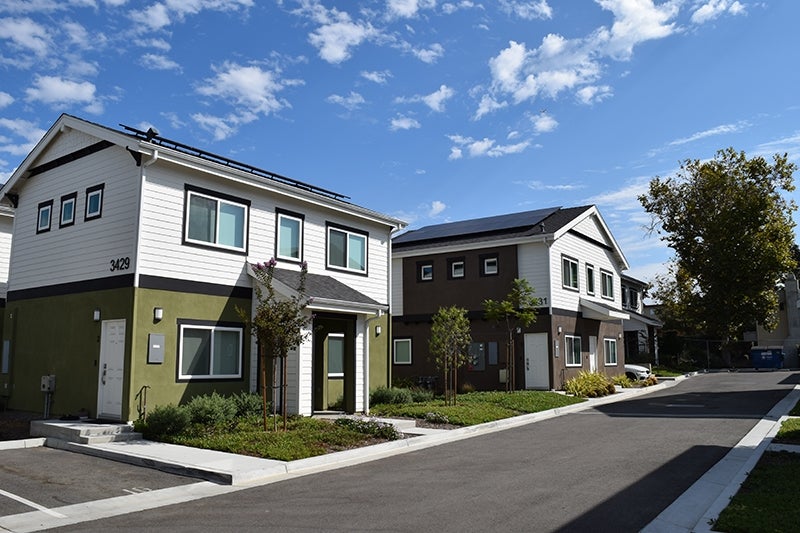
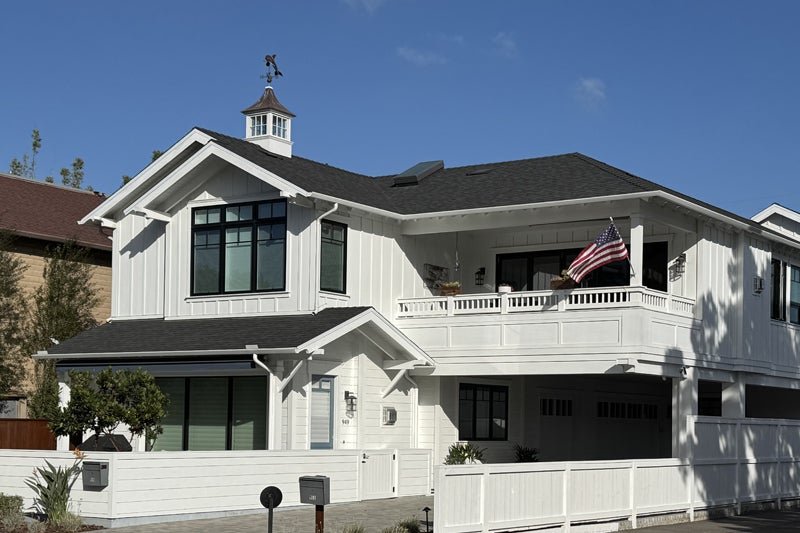
Four neighborhood home renderings, informed by the feasibility study and public input, will be developed to align with the scale of San Diego’s existing neighborhoods. These renderings will help visualize new homes that enhance the surrounding neighborhood. Sample site plans also help to show the possible layouts of buildings, roads, improvements and other features on an example lot.
Phase 2: Implement Neighborhood Homes
Phase 2 will include new proposed regulations providing a clear pathway to build neighborhood homes that enhance San Diego's neighborhoods. This will occur in 2026 once Phase 1 is complete and will include amendments to the City’s zoning regulations to allow for neighborhood homes, including new zones and minimum lot sizes.
Anticipated Timeline and Process
Phase 1 - Winter 2025 to Summer 2026 | Phase 2 - Summer 2026 to Winter 2026 |
|---|---|
Public Engagement | New Regulations |
Economic Feasibility | Clear development regulations to allow for Neighborhood Homes |
Neighborhood Home Renderings | |
Ongoing Public Engagement | |
Frequently Asked Questions
What are Neighborhood Homes?
Neighborhood homes are smaller attached and detached homes, townhomes, rowhomes, duplexes, and small-scale multiple-home buildings that complement existing homes in the surrounding area, maintaining the neighborhood’s high desirability.
What is the difference between Neighborhood Homes and…
Single-family homes?
A single-family home is located on its own lot and must meet specific zoning standards, such as minimum lot size (often a minimum of 5,000 square feet), setback requirements, and floor area ratio. Neighborhood homes require tailored regulations that allow for multiple neighborhood homes on one lot or a neighborhood home on a smaller individual lot that does not meet current single-family home zoning regulations, but nevertheless maintain the general look and feel of the community.
Condos or Apartment Homes?
Apartments and condos are homes within larger living complexes, often multiple stories, located within a single lot. While condos are typically individually-owned, apartments may be managed by a property management company and are typically rented to individual households. Neighborhood homes are intended to be in smaller buildings than most condos and apartments, typically not taller than three stories and that maintain the general look and feel of the community.
Accessory Dwelling Unit (ADU) Homes?
Accessory dwelling units are homes that are 1,200 square feet in size or less and are located on lots that have a proposed or existing single-family home or multi-family structure (such as apartment buildings). Single-family homes are allowed to add up to three ADU homes, and in some instances are allowed to add six ADU homes. Neighborhood homes may be larger than typical ADU homes to meet the needs of larger families and may include more homes than otherwise allowed under ADU regulations, while ensuring that their development maintains the general look and feel of the community.
What is the difference between Neighborhood Homes For All of Us and other state housing laws?
Senate Bill 9
Senate Bill 9 is a California law that allows homeowners to split their lot into two parcels and build up to two homes on each parcel for a total of four homes across both lots. Where certain objective design and regulatory criteria are met, Neighborhood Homes would provide a more clear pathway to building neighborhood homes and could allow for more homes on a lot in some circumstances.
Senate Bill 10
Senate Bill 10 is a California law that allows local governments to streamline the process for upzoning parcels in transit-rich areas to allow up to 10 units per parcel. Unlike SB 10, Neighborhood Homes would not be subject to state constraints, providing flexibility to ensure that any new changes meet the needs and unique character of San Diego.
Senate Bill 79
Senate Bill 79 requires the City to permit multi-family homes near near Transit-Oriented Development stops on land zoned for residential, commercial, or mixed-use development. SB 79 development focuses on building taller and higher density multifamily homes. Neighborhood Homes for All of Us is intended to provide opportunities for smaller-scale development in neighborhoods that are highly desirable for San Diego’s families.
When can I expect to see Neighborhood Homes in my community?
Before neighborhood homes can be built, the City's zoning and development regulations need to be amended. This is anticipated to be completed in late 2026. Whether and when new homes are built is dependent on how private property owners choose to use their property.
How is the City of San Diego ensuring that Neighborhood Homes can be developed in all communities?
The City Planning Department is working with the San Diego Regional Policy and Innovation Center to study the economic feasibility of neighborhood homes throughout the city. This will inform proposed regulatory changes to ensure that neighborhood homes can be built in a manner that is financially feasible - meaning that we can expect owners to build them.
Where can Neighborhood Homes be built?
During Phase 2, the City anticipates developing regulations to ensure that desirable neighborhood homes are allowed in the right places, particularly in higher resourced areas with the best access to transit and other neighborhood amenities. To ensure Neighborhood Homes further the City’s Climate Action Plan they will be considered in areas identified in the City’s General Plan Village Climate Goal Propensity Map. The map shows areas where future growth could occur and be supported by convenient and affordable opportunities to walk, roll, bike and ride transit to conduct daily activities. More growth in these areas would reduce car trips and their associated greenhouse gas emissions.
To affirmatively further fair housing, neighborhood homes will be prioritized in High and Highest Resource Areas by the State of California. High and Highest Resource Areas are those with access to higher paying jobs, better performing schools, and fewer adverse environmental conditions. Allowing more homes in these areas provides opportunities for more San Diegans to live in these highly desirable communities.
The final locations where Neighborhood Homes may be built within the Village Climate Goal Propensity Map will be determined during Phase Two based off of input received through the public engagement process.
How will neighborhood homes enhance the surrounding community?
Neighborhood homes are envisioned to blend in with the surrounding areas in which they are built. A neighborhood home project may include multiple homes in a traditionally single-family neighborhood, but from the front, the home looks similar in height, look and feel to other nearby homes.
Get Involved and Stay Connected

Future public engagement opportunities will be shared here.
A fact sheet about Neighborhood Homes for All of Us is available below.