


Lead and Copper Rule Tap Sampling
The City of San Diego is committed to providing the highest quality of drinking water to our residents. This includes minimizing possible exposure to lead by monitoring customers’ tap samples under the Lead and Copper Rule.
What is the Lead and Copper Rule?
In 1991, the EPA published a regulation to control lead and copper in drinking water. This regulation is known as the Lead and Copper Rule (LCR). Since 1991, the LCR has undergone various revisions. One requirement of the LCR is for water systems to test for lead and copper at consumer taps. The frequency of testing and the number of homes required to test depend on the results of previous studies. Changes made to the distribution system’s source water can also affect testing requirements. If lead concentrations exceed an action level of 15 parts per billion or copper concentrations exceed an action level of 1.3 parts per million in more than 10% of customer taps sampled, the water system must take actions to control corrosion and notify all customers. Currently, this study is conducted every three years in the City of San Diego.
For more information on the EPA’s Lead and Copper Rule, please visit https://www.epa.gov/dwreginfo/lead-and-copper-rule
Which homes can participate?
The EPA establishes the criteria that a home must meet to be eligible for participation, such as the type of interior plumbing or service line material. The EPA prioritizes locations based on their risk of lead contamination. The highest available tier must be sampled from until the minimum number of required homes is met (currently 50 per study). During sampling events, the City of San Diego will reach out to select residences to request participation.
Tier 1: Single family structures that:
- Contain copper pipes with lead solder installed after 1982 or contain lead pipes and/or
- Are served by a lead service line.
Tier 2: Multi-family residences that:
- Contain copper pipes with lead solder installed after 1982 or contain lead pipes and/or
- Are served by a lead service line.
Tier 3: Single family residences that contain copper pipes with lead solder installed before 1983.
If enough Tier 1, Tier 2, and Tier 3 sites are not available to meet the minimum number of sampling sites, other sampling sites representative of the distribution system may be used.
How can my drinking water become contaminated with lead?
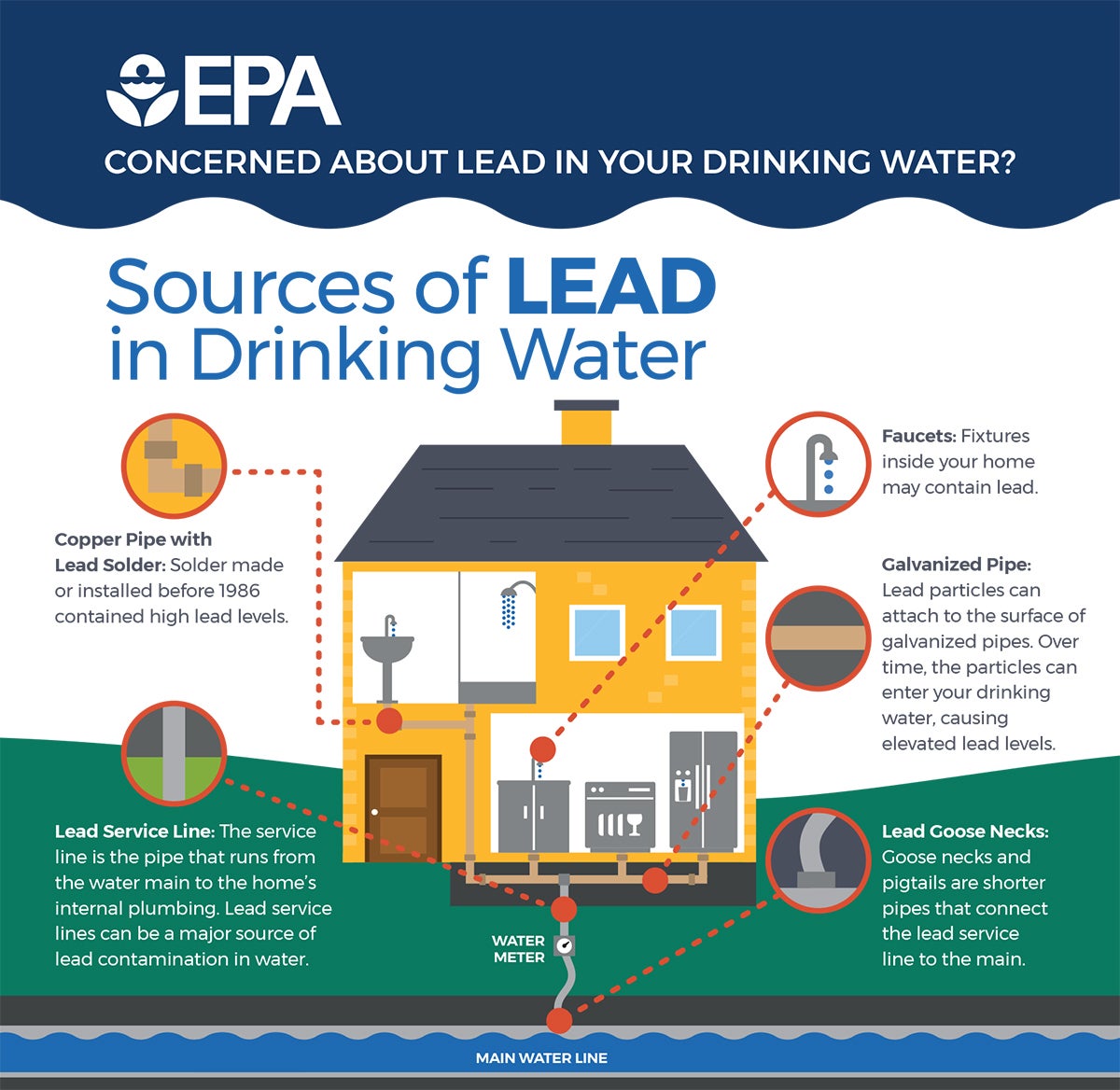
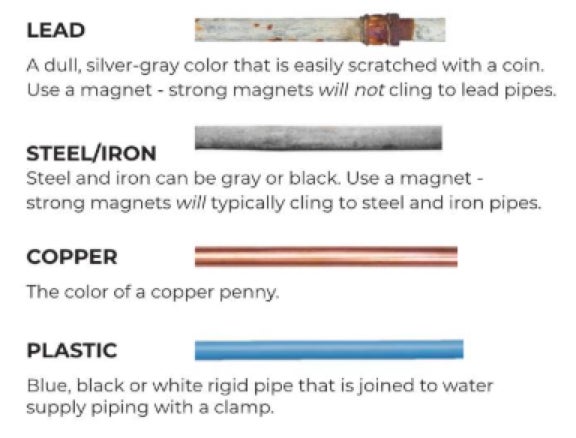
The City of San Diego has conducted a thorough survey of the distribution system, including service lines that run from the street water main to your home. There are currently no lead pipes in the City of San Diego’s distribution system. However, this inventory excludes plumbing inside individual homes (premise plumbing) and fixtures that could have lead-containing materials. The City banned the use of lead pipes for drinking water in 1927. Homes constructed on or before this date could contain lead pipes. Even after the City’s lead pipe ban in 1927, solder containing significant amounts of lead could still be used up until the federal lead ban of 1986. Tap sampling required under the Lead and Copper Rule helps to assess water quality all the way to the final point of consumption. If you live in an older home and are concerned that you may have lead pipes, a simple scratch test may be performed. Lead pipes scratch easily and reveal a shiny silver color; copper is more difficult to scratch and reveals an orange penny-like color; galvanized steel pipes remain a dull gray color when scratched. Magnets will stick to galvanized steel, but not copper or lead pipes. Copper is generally considered a safe choice for drinking water pipes, but ingesting high levels can cause adverse health effects in some sensitive populations. Galvanized steel pipes can corrode over time and trap lead and other contaminants that can later leach into drinking water.
What are the health effects of lead?
Lead is a naturally occurring metal that can cause negative health effects, especially in children. People can be exposed to lead by eating lead paint chips, ingesting contaminated food or water, or breathing in lead dust.
Children exposed to lead can suffer from:
- Lowered IQ.
- Damage to the brain and nervous system.
- Learning and behavioral difficulties.
- Slowed growth.
- Hearing problems.
- Headaches.
Adults can suffer from:
- Reproductive problems (in both men and women).
- High blood pressure and hypertension.
- Nerve disorders.
- Memory and concentration problems.
- Muscle and joint pain.
To learn more about health effects of lead, visit https://www.epa.gov/lead/learn-about-lead.
School and Child Care Testing
In 2017, California Assembly Bill 746 required community water systems to sample for lead at up to 5 water sources at all public schools (PreK-12th grade) constructed before Jan. 1, 2010. This sampling event concluded in 2019. Results can be found at the CA State Water Resources Control Board Website.
Recent revisions to the LCR will again require water systems to test for lead at schools and licensed child care facilities once every five years beginning in November 2027. While California Assembly Bill 2370 already requires lead testing at larger child care centers, smaller family child care homes are excluded. These revisions to the LCR require lead testing at both types of child care facilities.
The EPA has developed 3Ts for Reducing Lead in Drinking Water for schools and child care facilities to reduce lead exposure.
How can I find out if there is lead in my drinking water?
If you have concerns about the quality of the water within your home or business due to your structure's internal plumbing, please refer to the California State Water Resources Control Board’s list of state-approved laboratories for drinking water analysis. The list is provided for informational purposes only; the City does not endorse or recommend its contents.