

 CONNECT with the City
Business Inspections
Purpose
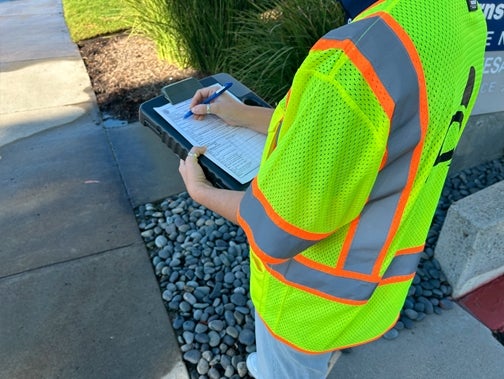
The City requires all industrial and commercial facilities within its jurisdiction to implement Minimum Best Management Practices (BMPs) to prevent pollution and protect water quality. These BMPs are tailored to the specific site conditions and activities, with inspection frequencies based on the pollution potential of each facility. Pollution prevention is emphasized as the primary approach to reducing discharges into the storm drain system, with inspections and enforcement ensuring compliance.
Mobile businesses, due to their transient nature and difficulty in regulation, are treated differently from stationary businesses, with specialized inspection procedures due to their lack of fixed locations and often inconsistent licensing.
Inspections
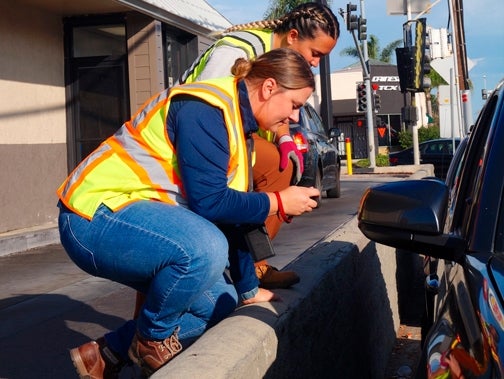
The Stormwater Department conducts inspections of industrial and commercial facilities to ensure compliance with best management practices (BMPs) and local ordinances aimed at reducing stormwater pollution. The assigned inspector will arrive onsite typically without an appointment to observe the business during normal operations. The inspection will include the assessment of all outdoor areas and operations that would impact stormwater runoff within the property boundary.
Inspections will include, at a minimum:
- Visual inspections for the presence of actual non-stormwater discharges,
- Visual inspections for the presence of actual or potential discharges of pollutants,
- Visual inspections for the presence of actual or potential illicit connections, and
- Verification that the description of the facility or area in the inventory has not changed.
- Assessment of compliance with applicable local ordinances and permits related to non-stormwater and stormwater discharges and runoff,
- Assessment of the implementation of applicable Minimum Industrial and Commercial BMPs,
- Verification of coverage under the IGP, when applicable, and
- Documentation of any problems or violations found, and subsequent follow-up action taken.
Enforcement
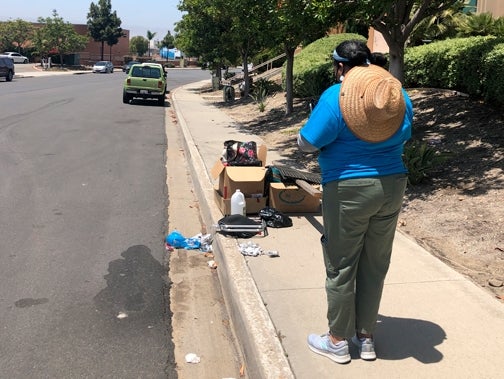
The City enforces its Storm Water Ordinance to ensure pollution prevention and compliance with Minimum Industrial and Commercial BMPs. Inspectors document violations with photos, written reports, and necessary documents. If a significant water quality threat is observed, immediate corrective action is required. For other deficiencies, businesses are typically given 30 days or until the next rain event to comply, whichever comes first.
If corrections aren’t made, a follow-up notice is issued, and further escalation occurs if necessary. Escalated enforcement, including education or penalties, is applied based on the severity of the violation, with fines increasing for repeat offenses. In extreme cases, the City Attorney may pursue criminal or civil prosecution. Administrative Citations range from $100 to $1,000, and Civil Penalties can reach up to $10,000 per day per violation.
Follow-Up Activities
City staff immediately address high-priority issues identified during routine industrial and commercial inspections. Inspectors discuss deficiencies and required corrections with responsible parties, aiming to complete corrections before the next rain event or within 30 days, whichever occurs first. If corrections cannot be made during the inspection, responsible parties must document the changes and notify the assigned inspector.
The assigned inspector will email or mail the enforcement letter and corresponding photos to the responsible party. Included in this letter is a compliance deadline and corresponding violations that require follow up documentation. Documentation such as photos, work orders, waste manifests, videos, etc. should be emailed to the inspector within a timely manner to ensure the inspection record is updated frequently and compliance expectations are met.
Contact Information
Stormwater Department
9370 Chesapeake Dr
Suite 100, Mail Station 1900
San Diego, CA 92123
619-235-1000
swppp@sandiego.gov
File a Complaint
Report potential stormwater violations and other issues with Get It Done.
Resources
English
Chinese
Spanish
Tagalog
Vietnamese
- AC Condensate-BMP Fact Sheets 2021
- Auto Fluids-BMP Fact Sheets 2021
- Car and Boat Washing-BMP Fact Sheets 2021
- Cleaning Pavement-BMP Fact Sheets 2021
- Commercial Outdoor Storage - BMP Fact Sheets 2022
- Construction Waste-BMP Fact Sheets 2021
- Erosion and Sediment-BMP Fact Sheets 2021
- Fire Sprinkler-BMP Fact Sheets 2021
- Floor Mat Cleaning-BMP Fact Sheets 2021
- Good Housekeeping-BMP Fact Sheets 2021
- Grease Bin Fact Sheet 2021 10 28 Web
- Illicit Connections-BMP Fact Sheets 2021
- Irrigation Runoff-BMP Fact Sheets 2021
- Landscape Waste-BMP Fact Sheets 2021
- Mobile Business-BMP Fact Sheets 2021
- Pet Waste-BMP Fact Sheets 2021
- Pools and Spas-BMP Fact Sheets 2021
- Pressure Washing-BMP Fact Sheets 2021
- Process and Wash Water BMP Fact Sheets 2021
- Secondary Containment - BMP Fact Sheets 2022
- Sewage Overflow-BMP Fact Sheets 2022
- Spill Management-BMP Fact Sheets 2021
- Storm Drain Protection-BMP Fact Sheets 2021
- Trash Cans and Dumpsters-BMP Fact Sheets 2021
- Stormwater Training Log
- Stormwater Hazardous Material Inventory
- Inspection Checklist
- Minimum Best Management Practices
Frequently Asked Questions
What is stormwater runoff and where does it drain?
Stormwater is rain or melted snow that flows from City streets, rooftops, driveways, parking lots, and other impervious areas, into bodies of water. The City of San Diego’s (City’s) Stormwater conveyance system collects runoff and flows directly to local creeks, bays and beaches. Since the City’s Stormwater conveyance system is separate from the sanitary sewer system, the majority of urban runoff from the City is discharged without any form of treatment.
To reduce pollutants that flow into nearby water bodies, the City implements or requires its residents and land owners to implement a variety of measures commonly referred to as Minimum Best Management Practices (BMPs) for Residential, Industrial, Commercial and Municipal Sites/Sources. Some examples of BMPs include covering potential pollutant sources to prevent contact with rain, employing erosion reduction techniques at construction sites, adjusting sprinklers to eliminate irrigation runoff, sweeping streets and parking lots, and building green infrastructure techniques like planters that capture and treat runoff along streets.
Why am I being inspected? Did someone report me?
The Regional Water Quality Control Board requires the Stormwater Inspections Program to inspect every business once every permit cycle. In addition to these routine inspections, we also respond to complaints reported by other departments, governing entities, and the public.
I don’t have any storm drains onsite – Do I still need to be inspected?
Yes, the Stormwater Inspections Program is required to inspect every industrial/commercial business within the City of San Diego, regardless of site design.
Why did I not receive a notice you were coming today?
Our objective is to assess the business during its normal operating procedures. Scheduling an inspection in advance could disrupt the usual operations of the business. Additionally, with an inventory of over 10,000 businesses to inspect each permit cycle, pre-scheduling would not be efficient in meeting permit requirements.
Can I deny you access to my property?
Yes, however under the San Diego Municipal Code, Chapter 1, Article 2 §12.0104 we have the right to access the property at a later date.
A Director and any designated Enforcement Official are authorized to enter upon any property or premises to ascertain whether the provisions of the Municipal Code or applicable state codes are being obeyed, and to make any examinations and surveys as may be necessary in the performance of their enforcement duties. These may include the taking of photographs, samples or other physical evidence. All inspections, entries, examinations and surveys shall be done in a reasonable manner. If an owner, occupant or agent refuses permission to enter or inspect, the Enforcement Official may seek an administrative inspection warrant pursuant to the procedures provided for in California Code of Civil Procedure Section 1822.50 through 1822.59.
If access is denied, we request that the business owner confirms an alternate inspection date/time within 24 hours.
The business, property management, property owner and/or contractor can assist in compliance efforts. In most cases, you are not required to hire a professional stormwater consultant to achieve compliance. However, if you would like to hire a professional to aid in compliance efforts, conducting a general internet search will yield several options for you to explore.
How do you know the discharge isn’t coming from my neighbor?
If you feel like the discharge is emanating from your neighbor’s property, contact your inspector and provide documentation to initiate that conversation.
There may be a citation associated with the violation, depending on the severity of the discharge. The inspectors base their evaluation on several factors:
History of violation by the responsible party
Nature and level or seriousness of violation
Duration of the violation
Efforts by the violator to correct the violation
Impact of the violation on the community and receiving waters
Good faith effort by and willfulness of the responsible party
Economic impact of the penalty on the responsible party
Extensions may be considered depending on several factors. If a significant water quality threat is observed, immediate corrective action is required. For other deficiencies, businesses are typically given 30 days or until the next rain event to comply, whichever comes first. Contact your assigned stormwater inspector to request an extension. Provide a written justification (email, letter, etc.) for the request along with any documentation or progress updates related to the inspection.
Where do I get grease containment trays?
Grease containment trays can be provided upon request from your grease vendor. You can also order secondary containment trays by conducting a quick search online or from a local hardware store.
What must I do to clean pavements legally?
When using a hose or power washing equipment to clean, you MUST have a plan to contain, capture and dispose of the water you use.
Control: Use methods or tools that allow you to better manage your work area, such as sectioning off your activity into smaller units, sweeping up debris, cleaning with a mop or using a trigger nozzle.
Contain: Isolate the work area by blocking water and/or debris from leaving the area and entering the storm drain. Try using sandbags, berms or booms to contain the water.
Capture: Once the job is complete, be sure to clean up the area and properly dispose of pollutants and debris. Sweep or vacuum
Disposal: Never allow wash water to flow into a street, alleyway, ditch or storm drain. Capture and collect the wash water and properly dispose of it. With the property owner’s permission, wash water can be drained onto landscaped areas provided it can be absorbed by the soil without runoff or soil contamination. Wash water may also be collected and disposed of into the sanitary sewer system such as an onsite sink, toilet or lateral cleanout. For rules concerning sanitary sewer system disposal, contact the Industrial Wastewater Control Program at (858) 654-4100.
Where and how do I redirect the car wash overflow?
Car wash overflow should be directed to the sanitary sewer. For rules concerning sanitary sewer system disposal, contact the Industrial Wastewater Control Program at (858) 654-4100.
How do I report an illicit discharge?
To report stormwater pollution in San Diego, call the Think Blue Hotline: (619) 527-7500. You can also use the Get It Done app at sandiego.gov/get-it-done.
Who has responsibility to remove and dispose of waste from private property?
It is the responsibility of the property owner to remove debris and trash from their property. However, if the issue persists, please contact the Environmental Services Department at (858) 694-7000 or email trash@sandiego.gov for more information on assistance options. In addition, contact the San Diego Police Department for trespassing complaints.
If you would like any of these documents translated into a different language, please reach out to swppp@sandiego.gov or directly to your assigned inspector.