


Transit Village Plan: Shaping Senate Bill 79 to Best Serve San Diego through a Transit-Oriented Development Alternative Plan
What is Senate Bill 79?
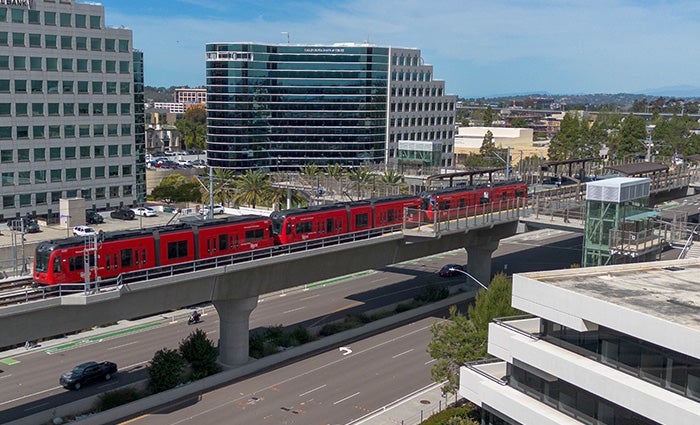
In 2025, the State of California approved Senate Bill 79 (SB 79) to address the State’s housing shortage, create homeownership opportunities and build more homes near transit. SB 79 requires the City of San Diego to approve certain new home projects within a specified radius of qualifying train and bus stops, which the bill calls Transit-Oriented Development Stops, on sites zoned for residential, mixed or commercial development.
This state bill requires the City to implement it at the local level. SB 79’s requirements are generally consistent with policies included in the City’s Housing Element, calling for more housing options throughout the city, and the City’s Climate Action Plan, calling for more homes and jobs located near transit.
Where does SB 79 apply?
SB 79 applies to areas half a mile (as the crow flies) around Transit-Oriented Development Stops, which are trolley stops and certain bus stops (Transit-Oriented Development Stops). SB 79 requires the San Diego Association of Governments (SANDAG) to prepare a map of the qualifying Transit-Oriented Development Stops in the region.
On June 18, 2026, SANDAG released the DRAFT SB 79 Transit-Oriented Development Map identifying these qualifying stops within the City of San Diego. The City Planning Department’s SB 79 maps have been updated to reflect SANDAG’s map. The final Transit-Oriented Development Stops are included in the maps on this webpage. These maps also show the areas that are subject to SB 79; they do not include areas that have been exemptedbecause they are more than 1 mile walking distance from the qualifying stop.
View Map of qualifying trolley and bus stops
What development does SB 79 allow in San Diego?
SB 79 requires cities to approve multifamily homes up to a specified height, density, and floor area ratio on land zoned for residential, mixed-use and commercial uses around Transit-Oriented Development Stops (Transit Villages). The bill requires allowing more homes in taller buildings in areas closer to the Transit-Oriented Development Stop. Additionally, the bill requires approval of more homes to be built on sites that are located within 200 feet of a Transit Village.
For San Diego, SB 79 would allow for the following:
| Distance from Qualifying Transit Stop | Residential Density | Floor Area Ratio (FAR) | Building Height |
|---|---|---|---|
| 1/2 to 1/4 mile | 80 Homes Per Acre | 2.5 | 55 Feet |
| Within 1/4 mile | 100 Homes Per Acre | 3.0 | 65 Feet |
| Within 200 feet | Up to 140 Homes Per Acre | Up to 4.0 FAR | Up to 85 feet |
SB 79 also requires cities to plan for housing capacity around qualifying transit stops. The following table shows the number of homes that is required by SB79, the number of homes that could be built under the City’s current zoning, and the increased number of homes that the City is required to permit for the 54 transit stops preliminarily identified by the City in April 2026 and the updated 74 transit stops identified by SANDAG on June 18, 2026.
Estimated Home Capacity | SB 79 - Transit Stops | Change | |
|---|---|---|---|
Initial 54 Transit Stops the City Identified | Updated 74 Transit Stops SANDAG Identified | ||
| The Number of Homes the City needs to provide Capacity for Under SB 79 | 861,000 | 1,047,000 | 186,000 |
| The Number of Homes the City has Capacity for Under Current Zoning | 494,000 | 609,000 | 115,000 |
| The Number of Homes the City will need to Plan for above Current Zoning | 367,000 | 438,000 | 71,000 |
When will SB 79 take effect?
SB 79 took effect on July 1, 2026, at which time, the City is required to approve development that meets the bill’s requirements. For information about the implementation of SB 79 on sites that are eligible as of July 1, please review Information Bulletin 479: SB 79 Transit-Oriented Housing Development Projects.
However, as detailed below, not all areas went into effect on July 1, 2026 since the City Council adopted an ordinance to phase in SB 79’s implementation. While some areas were required to take effect on July 1 (about 24 percent of the total areas), other areas will not take effect until the City adopts the Transit Village Plan, referred to under SB 79 as a Transit-Oriented Development Alternative Plan.
View Map of areas that took effect under SB 79 on July 1, 2026
View Map of areas that will take effect upon the adoption of a Transit Village Plan
View Map of areas that will take effect in 2031 (all Low Resource Areas)
How will SB 79 be implemented in San Diego?
The City has proactively updated community plans, zoning, and the land development code, and streamlined approval programs to allow for more homes to be built near transit. While SB 79 requires the City to permit additional homes in certain areas, the City’s existing regulations are also available to continue to encourage new home development, and in many instances already allow for more homes than otherwise required under SB 79.
These efforts have involved careful analysis and planning for the future where additional growth is allowed. SB 79 anticipated the need for cities to more thoughtfully implement its requirements by allowing the City to develop a Transit-Oriented Development Alternative Plan, which will be called the Transit Village Plan.
The Transit Village Plan will allow the City to better address issues like fire safety, ensuring new homes are resilient to climate change, the need for equitable distribution of housing throughout the City, protection of historic resources, neighborhood scale, and related considerations. This process will also provide opportunities for the public to share their thoughts on how to best implement SB 79 in San Diego.
What will the Transit Village Plan do?
As mentioned above, the City will prepare a Transit Village Plan to serve as the City's Transit-Oriented Development Alternative Plan under SB 79 allowing the City to tailor SB 79's requirements to best reflect San Diego's community needs and constraints.
The Transit Village Plan is anticipated to achieve the total required increased density requirements under SB 79, but in a manner that redistributes that density in a manner that best suits San Diego's needs and constraints. This is anticipated to include amendments to the Land Development Code, community plans, and the General Plan. Once adopted, the Transit Village Plan will apply to all qualifying SB 79 areas, including area s that are not on sites within a Very High Fire Hazard Severity Zone, Low Resource Area, designated historic resource, or subject to 1 foot of sea level rise.
The City Planning Department will share a draft of the Transit Village Plan on this webpage for the public’s review and feedback. The plan will then be heard by the Planning Commission and Land Use & Housing Committee before being presented to the City Council for consideration. The City Planning Department aims to present the Transit Village Plan to the City Council in early 2027.
The Transit Village Plan must be reviewed by the California Department of Housing and Community Development after its adoption. If the Department recommends changes to the Alternative Plan for consistency with SB 79 requirements, the Alternative Plan may be further amended.
How is the City already planning for more homes near transit?
The City has already taken steps to plan for more homes near transit through updates and amendments to the General Plan, community plans, zoning, development regulations, and expedite programs. These efforts help create more opportunities for all San Diegans to live, work, shop and play in places where they can walk, bike, roll, and ride transit.
In April 2026, the City preliminarily identified 54 bus stops and trolley stations as meeting the definition of a Transit-Oriented Development (TOD) Stop under Senate Bill 79 (SB 79), subject to confirmation from the San Diego Association of Governments (SANDAG). After this preliminary identification of TOD stops/stations occurred, as required by SB 79, SANDAG prepared a DRAFT SB 79 Transit-Oriented Development Map that identifies 20 bus stops and trolley stations in addition to the 54 bus stops and trolley stations preliminarily identified, for a total of 74 transit stops.
While the additional transit stops identified by SANDAG increase both the number of areas subject to SB 79 and the overall capacity for future homes allowed under the law, the City has already been proactively planning for additional homes near these additional 20 transit stops independent of SB 79.
The City recently updated its General Plan, Blueprint SD, in 2024 to guide how and where the city will grow. The General Plan aligns future growth with the city's climate, housing and equity goals across the City. Community Plans use this citywide approach to establish a 30-year roadmap for local land use, housing, transportation, parks, and urban design, and identify areas for more homes and jobs near transit. Recently approved community plan updates, as well as community plans currently being updated, already align with SB 79 requirements and in some cases provide even greater opportunities for more homes near transit.
In August, the City released the first draft of the Mid-City Communities Plan Update, which is consistent with what would be required under SB 79. These areas had already been identified for this increased home capacity due to a variety of factors, including proximity to transit.
These ongoing planning efforts demonstrate how the City is already planning for more opportunities for San Diegans to live near transit while considering the unique needs, opportunities, and constraints of individual communities, and will continue to do so consistent with the City’s General Plan.
Additional Information
The City Planning Department has prepared an interactive map that shows locations of the city’s qualifying trolley and bus stops, the areas exempted from SB 79, and where implementation will be phased.
Supporting Documents and Materials
Adoped ordinance exempting and phasing implementation of SB 79
On May 21, 2026, the San Diego City Council adopted an ordinance to:
- Exempt areas from SB 79 that are more than a one-mile walking distance from a qualifying trolley or bus stop
- Phase the implementation of SB 79 in Low Resource Areas until the City adopts its next General Plan Housing Element in 2031 (view map showing Low Resource Areas identified by the California Tax Credit Allocation Committee).
- Phase the implementation of SB 79 in Very High Fire Severity Zones, on sites with a designated historic resource, and sites subject to one foot of sea level rise until the City has adopted the Transit Village Plan.
View the staff report for this item here.
SB 79 Maps
Areas More than One-Mile Walk from a Qualifying Trolley or Bus Stop Map
Areas within one-half mile of a qualifying trolley or bus stop that have a walking path of more than one mile to the qualifying trolley or bus stop where SB 79 does not apply in San Diego.
Low Resource Opportunity Areas identified by the California Tax Credit Allocation Committee will phase in by 2031 as part of a Transit Village Plan update.
Areas within Very High Fire Hazard Severity Zones will phase in upon adoption of the Transit Village Plan.
Sites containing historic resources designated as of January 1, 2025 will phase in upon adoption of the Transit Village Plan
Sites Affected by One Foot of Sea Level Rise Map
Sites identified as vulnerable to one foot of sea level rise will phase in upon adoption of the Transit Village Plan.
Receive Updates About SB 79
Initiatives & Ongoing Work

Planning Department
9485 Aero Drive, M.S. 413
San Diego, CA 92123
619-235-5200
planning@sandiego.gov